
Walk into a magazine-worthy living room and you’ll notice the window treatments before you can say why. The drapes look taller, fuller, and more deliberate than anything from a big-box store, yet the fabric might be nearly identical. The difference is in the hanging. Rod height, panel width, hem length, and heading style do far more heavy lifting than most homeowners realize, and getting them right is what separates “fine” from finished. At The Well Dressed Window, we’ve been designing and installing draperies for homes from the Lower Mission to Lake Country, and the same handful of rules show up on every job. Here’s how to apply them, whether you’re hanging drapes yourself this weekend or planning custom drapes for the whole house.
Rod Height and Width Rules That Make Drapes Look Custom
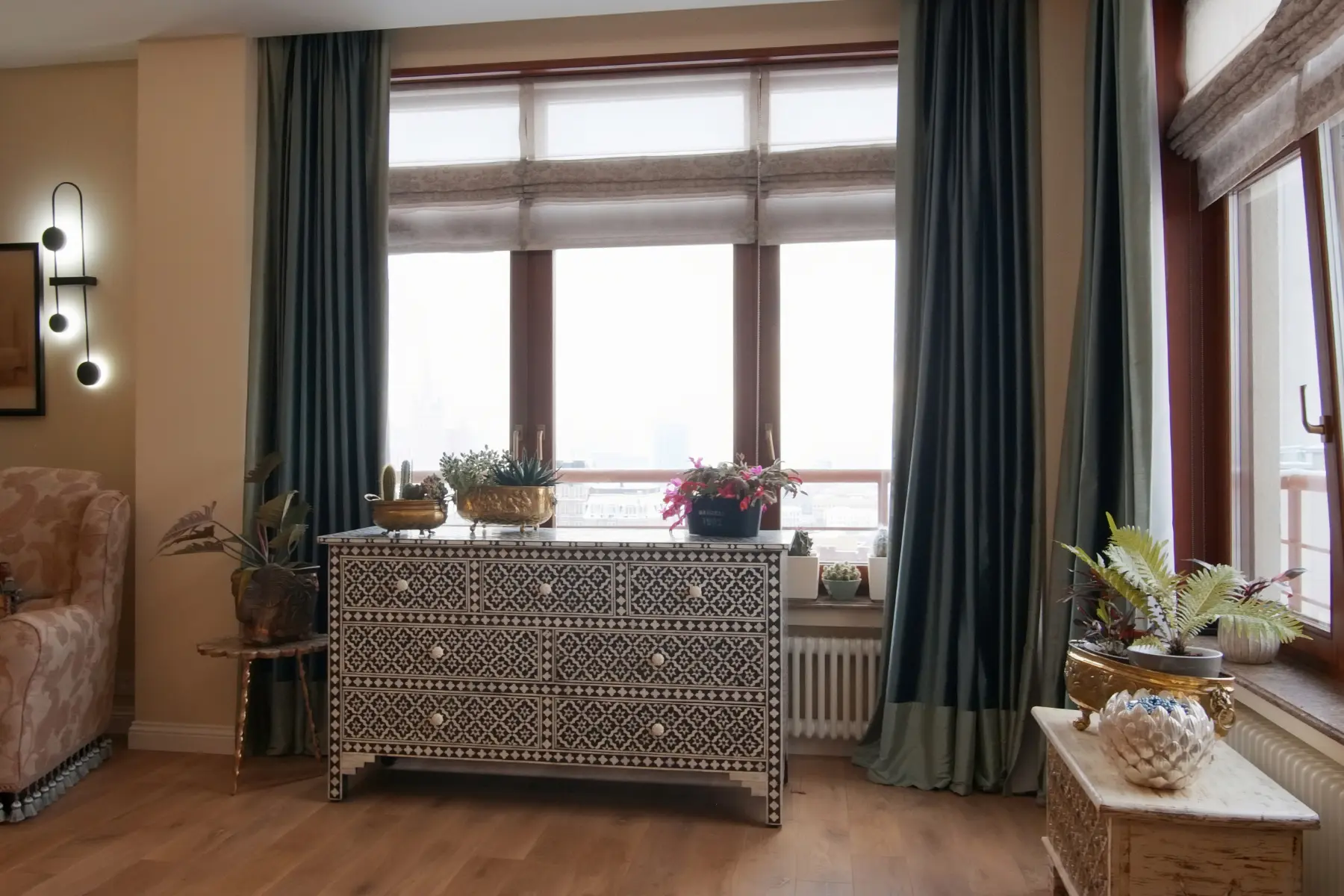 If you only remember one thing about how to hang drapes, make it this: mount high and wide. Most off-the-shelf installs put the rod a couple of inches above the window frame. Designers go higher, usually two-thirds of the way between the top of the frame and the ceiling, and sometimes right up to the crown moulding. The eye follows the fabric upward, the window reads taller, and the ceiling feels higher than it actually is. Width works the same way. Extend the rod 8 to 12 inches past the frame on each side so open panels stack against the wall instead of blocking glass. In Okanagan homes with big lake-facing windows, that extra clearance is the difference between a bright room and a dim one.
A quick checklist for hanging drapes correctly:
- Measure the full wall, not just the window.
- Choose brackets rated for the weight of lined fabric.
- Level the rod with a laser, not by eye.
- Order panels at two to two-and-a-half times the rod width for proper fullness.
Fullness is the step most people skip. Skimpy panels that barely meet in the middle when closed are the single biggest giveaway of DIY Kelowna draperies, and no amount of expensive fabric will hide it.
Window Curtain Length Explained: Float, Kiss, Break, and Puddle
Once the rod is set, window curtain length determines the mood. There are four classic finishes:
- Float – The hem sits about half an inch above the floor. Crisp, practical, and ideal for high-traffic rooms or homes with pets.
- Kiss – The hem just touches the floor. It’s the hardest to achieve and the most tailored, which is why it’s the signature of professionally made Kelowna draperies.
- Break – An extra inch or two of fabric folds softly at the floor. Forgiving on uneven hardwood and quietly luxurious.
- Puddle – Three to six inches pooled on the floor. Romantic and formal, but a dust magnet. Best reserved for a seldom-used dining room.
Two mistakes crop up constantly. The first is sill-length panels on a full-height window, which chops the wall in half. The second is measuring before the rod is installed. Floors in older Kelowna homes are rarely level, and a quarter-inch slope across a wide window becomes obvious once the fabric hangs. Measure from the installed rod to the floor at both ends and the centre, then order to the shortest figure.
Ripplefold Drapes and Pinch Pleat Compared
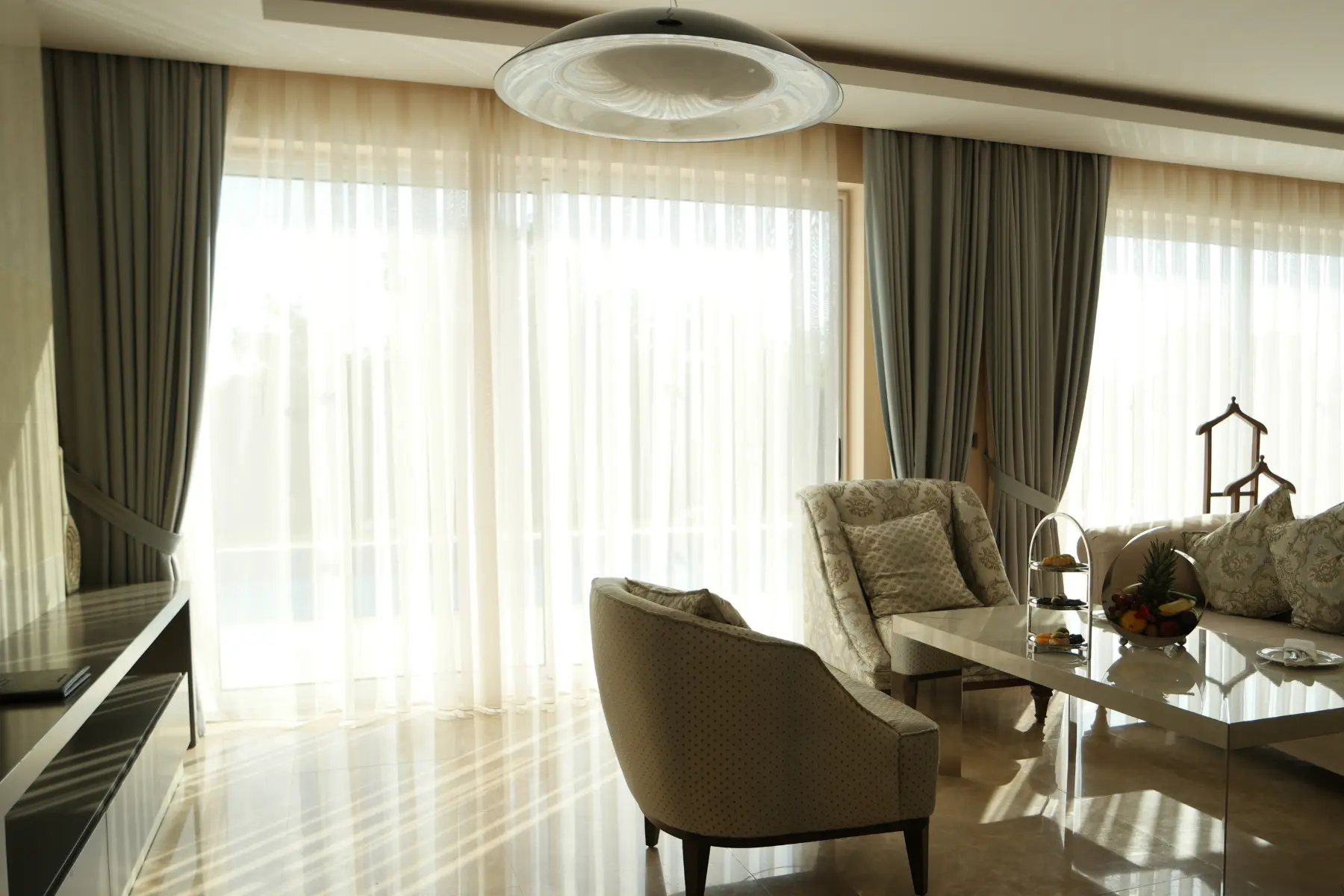
The heading, meaning how the top of the panel is constructed, shapes how the fabric falls. Two styles dominate custom drapes today. Ripplefold drapes glide on a track with snap carriers, creating continuous, uniform S-curves from one end to the other. There’s no rod to see, so they suit modern and minimalist interiors, floor-to-ceiling glass, and motorized systems. They also stack very tightly, which matters on wide sliding doors. Ripplefold Kelowna draperies have become our most requested style for new builds in Kettle Valley and Wilden for exactly this reason.
Pinch pleat gathers fabric into tailored, hand-sewn folds at the top and hangs from rings on a decorative rod. It’s the classic choice, and the hardware becomes part of the design. Two-finger pleats read contemporary; three-finger pleats feel traditional. If you love a wrought-iron or brass rod with finials, this is your heading. Fabric matters here too. Lightweight linens ripple beautifully but can look limp as pleats, while heavier velvets and wools hold a pinch pleat with real authority. We bring samples of both to every Kelowna draperies consultation so you can see them hung before committing.
Bedroom Drapes Ideas for Darker Mornings and Better Sleep
Summer sunrises in the Okanagan arrive before five, and nothing tests window treatments like a 5 a.m. glare. A few bedroom drapes ideas worth stealing:
- Layer blackout lining behind a decorative face fabric. You get the look you want and complete darkness without a stiff, hotel-style panel.
- Wrap the return. Have the panel bend back to the wall at each end so no light leaks around the edge. It’s a small detail that makes blackout Kelowna draperies actually black out.
- Pair with a Hunter Douglas Duette® shade. Cellular shades add insulation on cold nights and handle daytime privacy, so the drapes can stay purely decorative.
- Rethink the closet. Swapping dated bifold or mirrored doors for closet door drapes on a ceiling track visually calms a small bedroom and costs far less than new doors. Match the fabric to your window panels for a cohesive, dressing-room feel.
For colour, a tone slightly deeper than the wall reads calm and intentional. Save busy patterns for cushions.
Why Custom Drapes in Kelowna Outlast Off-the-Shelf Panels
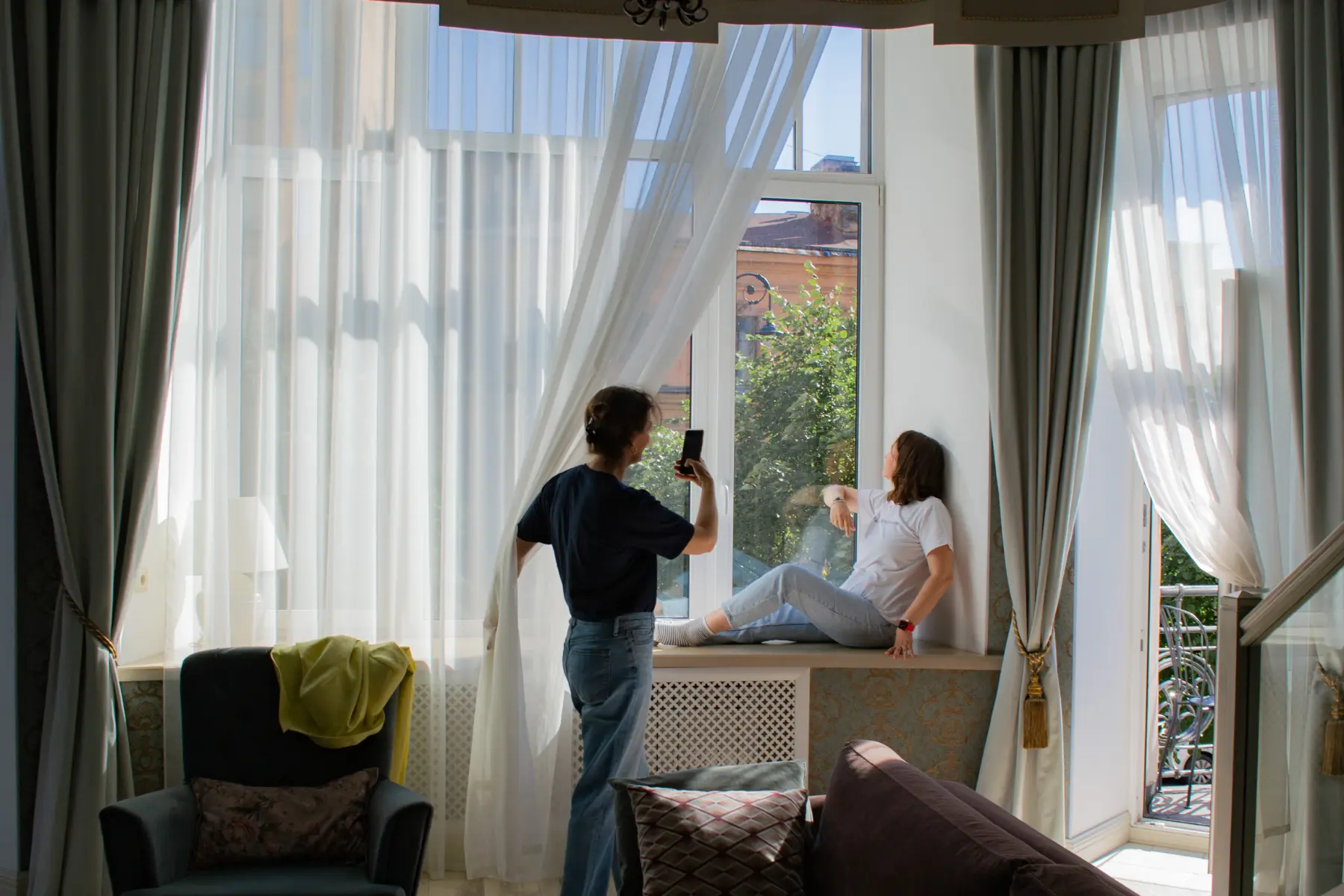
Ready-made panels come in a handful of lengths, unlined or thinly lined, with headings designed to fit any rod rather than your rod. Custom Kelowna draperies are built the other way around, starting with your window, your light, and your floor. Here’s what that means in practice:
| Off-the-shelf panels | Custom drapes | |
|---|---|---|
| Length | Fixed increments, often hemmed at home | Cut to your floor at your rod height |
| Lining | Light or none | Blackout, thermal, or interlining to suit the room |
| Fullness | Usually 1.5x or less | 2x to 2.5x for a proper drape |
| Hardware | Generic | Matched to fabric weight and heading style |
| Lifespan | 3–5 years before fading and sagging | 10+ years with quality fabric |
Southern exposure and dry Okanagan summers are hard on fabric. Lined custom drapes resist sun rot and fading in a way thin ready-mades never will, which is why Kelowna draperies we installed a decade ago are often still hanging, still square, and still the first thing guests comment on.
A quick word on drapes vs. curtains
People use the terms interchangeably, but drapes are generally lined, floor-length, and heavier, while curtains are lighter and often unlined. If you’re still weighing the two, our curtains vs. drapes guide breaks down which belongs where.
Ready to Hang Drapes the Designer Way?
Learning how to hang drapes properly is worth the effort, and the rules above will take any DIY install a long way. But rod height, perfect length, and a crisp ripplefold or pinch pleat come together most reliably when one team measures, fabricates, and installs. That’s what The Well Dressed Window has done for Kelowna draperies clients for years, from a single bedroom panel to a full custom home. Browse our draperies page for inspiration, then contact Michelle for a free estimate. We’ll bring the samples, the laser level, and a few opinions about where your rod really belongs. Your Kelowna draperies deserve nothing less.